

So which sectors are likely to do well in 2022? Should you focus on domestic economy-related sectors or export-oriented ones?
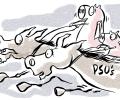
'The government will take proactive steps to see that their participation in the equity market, especially in PSU stocks, is rewarding.'

The PSU had earlier this week filed the draft papers for its initial public offering, billed to be India's biggest issue, through which the government expects to raise up to Rs 15,000 crore (Rs 150 billion).

Lines up seven OFS issues along with half a dozen IPOs for the next few months

Changing tracks helps. But, not taking the beaten path isn't always helpful. This is the story of two of India's biggest privatisations - Air India and Bharat Petroleum (BPCL). Nearly two decades after the last privatisation, a landmark divestment concluded this year when the loss-making national carrier Air India was sold to the Tatas.

'There is no need to do anything, let your SIPs get deducted every month, and stick to your allocation between equity, fixed income and emergency funds and your risk covers.'
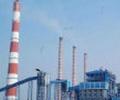
The government on Friday said it is expecting to raise about Rs 8,100 crore (Rs 81 billion) from the five per cent stake sale in power PSU NTPC through a Follow-on Public Offer (FPO).

PSU divestment, LIC IPO, fiscal deficit: Budget 2021 marks a clear change in the Modi government's stance from fiscal conservatism to growth orientation.

'The consolidation of the world's fifth-largest economy in the hands of 15-20 corporate giants is a once-in-generation event, which we are focusing on.'

Omkeshwar Singh, Head, Rank MF, a mutual fund investment platform, answers your queries.

UTI's legacy and brand recognition, together with a robust distribution network and access to public sector money, could work in its favour, and help it command a premium

Currently, the government holds 100 per cent stake in the PSU and plans to offload 10 per cent equity through the IPO, which will offer 63.16 crore (631.6 million) shares.

Though this is part of the divestment drive, government's stake in these companies remains 100 per cent even after the buybacks

The government on Monday budgeted Rs 1.75 lakh crore from stake sale in public sector companies and financial institutions, including 2 PSU banks and one general insurance company, in the next fiscal year beginning April 1. The amount is lower than the record Rs 2.10 lakh crore which was budgeted to be raised from CPSE disinvestment in the current fiscal year. However, the COVID-19 pandemic impacted the government's CPSE stake sale programme, and the target has been lowered to Rs 32,000 crore in the Revised Estimates.
Despite the general anticipation that the market was in for a correction today, it opened steady. Mixed trends pervaded, though, with selling in blue chips and stock-specific buying on select side counters.
UTI Mutual Fund will hit the capital markets with initial public offering on Tuesday for its sixth thematic funds including auto, banking and public sector undertakings.

'They want (the ownership and management of PSU banks) to pass into the hands of a private sector entity.' 'Ownership of these banks will go from the public sector to private sector.'

Omkeshwar Singh, Head, Rank MF, a mutual fund investment platform, answers your queries.
The market was all set for another positive opening today and one of the major triggers was the successful Maruti IPO that gave PSU stocks the desired push.

Helped by the Offer for Sale route, a whopping Rs 45,300 core was mobilised through public equity markets in 2013, a growth of 25 per cent over last year.

This will encompass the sale of Air India, a number of other privatisation initiatives, mergers, initial public offerings, the Centre's two exchange-traded funds, buybacks and offers-for-sale, and even monetisation of land assets.

Omkeshwar Singh, Head, Rank MF, a mutual fund investment platform, answers your queries.

'I have been advising investors since the last couple of months to at least take their capital out.' 'Most of the people have made 50-60 per cent in the market, if not more, they must at least take their capital out.'

'National assets, created over the years through tax-payers's money, should not be handed over to business houses at throwaway prices.'
ONGC was the top performer while private banking major ICICI Bank extended gains

The breadth, indicating the overall health of the market, turned negative from positive

2015 is set for a lot of changes - and some that we would like to happen

The S&P BSE Midcap and the S&P BSE Smallcap indices under-performed to lose 0.8% and 1.6%

Mixed global cues and decline in crude oil prices further dent the sentiments.
Markets snapped their 8-day winning streak.

Punjab National Bank has made a name for itself in recovery of bad loan dues. Usha Ananthasubramanian, managing director and chief executive officer of the government-owned lender, explains how it has achieved this reputation.
PSU bank shares were the top gainers on hopes of a rate by the RBI on easing consumer inflation

Infosys, Tata Motors, ONGC, TCS and GAIL are the top 5 losers.
The broader markets also ended lower in line with the benchmark indices
 © 2026 Rediff.com - Advertise with us - Disclaimer - Privacy Policy - Sitemap - Feedback - About us - Terms of use - Grievances